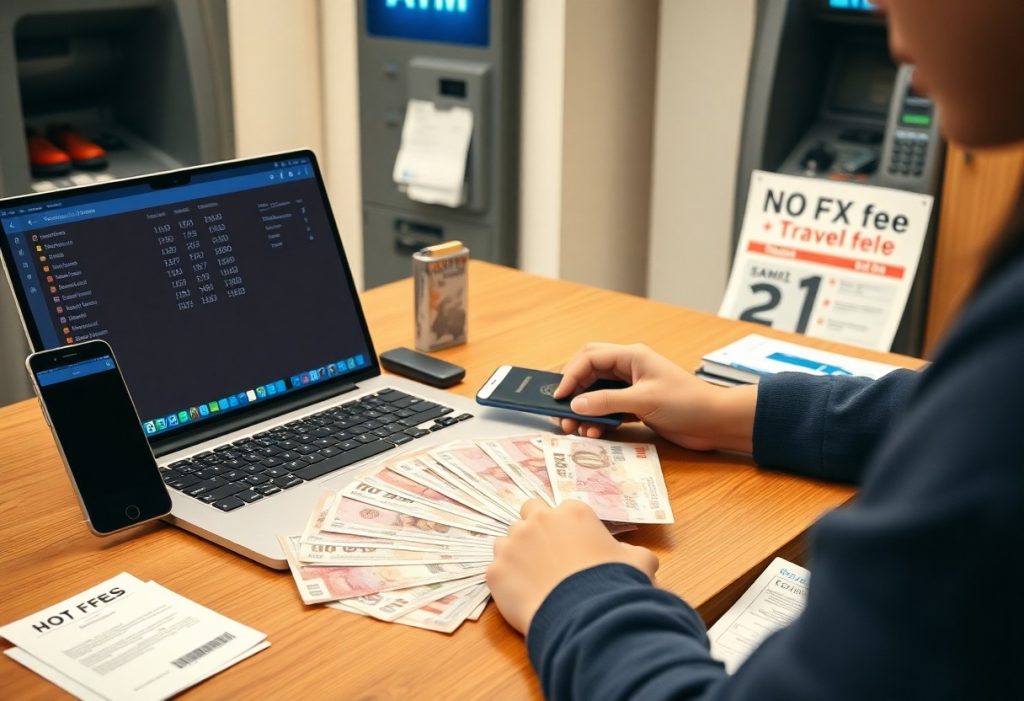

A new year often comes with fresh plans such as international travel, overseas education, global business opportunities, or regular money transfers abroad. In all these situations, foreign exchange plays a key role. That is why choosing the right money exchange partner at the beginning of the year is more important than many people realize.
A reliable forex partner helps you avoid unnecessary charges, confusing rate structures, and last minute hassles. Transparent pricing, secure transactions, timely support, and full regulatory compliance can make a real difference in how smoothly your international financial needs are handled throughout the year.
At GEM Money Exchange Pvt Ltd, Chennai, we focus on building trust through clear processes, competitive exchange rates, and dependable service. Whether you are an individual or a business, having the right money exchange partner gives you confidence, better financial control, and peace of mind as you move into the new year.
Exchange decisions you make at the start of the year affect your finances and peace of mind; choosing a partner with transparent rates, low fees, strong compliance, fast execution and reliable customer support ensures you keep more of your money, reduce risk from regulatory or fraud issues, and leverage technology that simplifies transfers as your needs evolve.
Key Takeaways:
- Choosing a partner with competitive rates and transparent fees maximizes the value of every transaction in the new year.
- Working with regulated, reputable providers reduces fraud risk and ensures funds are protected and compliant with local rules.
- Fast transfers, broad currency coverage and hedging or automation tools improve cash flow, budgeting and cross-border planning.
Understanding Currency Exchange
The Basics of Currency Exchange
You interact with two core prices: the spot rate (immediate settlement) and forward rates (future settlement), plus the bid-ask spread providers add; for example, a quoted USD/EUR spot of 1.10 means $1.10 per €1, and retail spreads commonly range from 0.5% to 2% above mid-market quotes, so you must check live mid-rates, commission and minimum fees before converting.
Factors Affecting Exchange Rates
Rates respond to interest-rate differentials, inflation trends, trade balances, geopolitical events and market sentiment; for instance, GBP fell roughly 15% versus the USD after the 2016 referendum and the Swiss franc jumped in January 2015 when the SNB removed its EUR peg, so you should follow central-bank calendars and key releases to anticipate volatility.
- Interest-rate gaps drive carry flows and capital movement.
- Inflation surprises alter real returns and pressure currencies.
- Political shocks, sanctions and trade shifts cause rapid re-pricing.
- Recognizing how combinations of these drivers shape short-term moves helps you time conversions and set hedges.
You also need to weigh liquidity and instruments: global FX turnover now exceeds $6 trillion daily, so majors like EUR/USD offer tight spreads while exotics can widen beyond 1% on thin liquidity; companies routinely use forwards, options or limit orders-e.g., fixing a 3‑month forward on a €5M exposure-to cap FX cost or capture favorable spikes without full immediate execution.
- Track CPI, GDP and central-bank rate statements for the currencies you use.
- Compare providers on live mid-market rate adherence, fees and execution speed.
- Consider forwards, options or limit orders to control exposure during volatile windows.
- Recognizing these practical steps reduces hidden costs and guides you to the right exchange partner.
The Importance of Choosing the Right Partner
When you select a money exchange partner, small differences compound: a 0.5% spread on a $50,000 transfer costs you $250, while a 0.1% specialist rate saves $200. You should weigh transparency, settlement speed, and available hedging tools-delays of 2-5 business days or opaque markups can erode margins and disrupt cash flow for payroll, vendor payments, or investment timing.
Trust and Reliability
You need providers regulated by authorities like the FCA, FinCEN or MAS and evidence that client funds are held in segregated accounts; verify licence numbers and check regulator complaint logs. Operational history matters too: repeated outages, compliance fines or slow KYC processes have led businesses to freeze payments and incur penalties, so you should prioritize partners with clear audit trails and fast dispute resolution.
Fees and Charges
You should compare fixed fees, percentage markups and receiving-bank or intermediary costs: banks commonly mark up 1-3% while specialist platforms often charge 0.1-0.8% plus a $1-$10 fixed fee. For example, on a $10,000 transfer a 1% markup equals $100, whereas 0.2% + $5 costs $25, a $75 difference that adds up over repeated transfers.
Dig deeper into true cost: watch for minimum fees ($5-$25), SWIFT/intermediary charges ($15-$50), and tiered pricing or hidden spreads on certain currency corridors. If you move $20,000 monthly, negotiating from 0.2% to 0.05% saves $30 per month ($360/year); using forward contracts or limit orders can further lock rates and protect your budget against volatility.
Evaluating Money Exchange Services
Types of Exchange Partners
You should evaluate banks, online platforms, bureaux de change, peer‑to‑peer services, and fintech apps for spreads, fees, speed, limits, and support; for example, banks often add 1-3% margin while P2P platforms can be under 0.5%. Comparing these attributes helps you pick the best fit. Knowing which tradeoffs-cost versus speed versus cash availability-matter most will guide your choice.
- Banks: stability, branch support, higher margins
- Online exchangers: low margins, digital convenience
- Bureaux de change: immediate cash, poorer rates
- Peer‑to‑peer: best mid‑market rates, variable liquidity
- Fintech apps: fast transfers, transparent fees
Types of Exchange Partners
| Bank | High trust, 1-3% margin, branch service |
| Online aggregator | 0.2-1% margin, compares multiple providers |
| Bureau de change | Immediate cash, wide spread, useful for travel |
| Peer‑to‑peer | Near mid‑market rates, dependent on matching |
| Fintech | Fast settlement, clear fees, often lower limits |
Comparing Services and Rates
You must compare the advertised rate versus the mid‑market rate, flat fees, and any receiving or intermediary costs; for instance, a $5,000 transfer with a 2% margin costs $100 extra versus $20 at 0.4% margin. Check transfer speed (same day to 5+ days), limits, and refund policies to see total cost and risk.
Comparison Factors
| Factor | What to check |
| Exchange margin | Difference from mid‑market rate (%) |
| Flat fees | Per transfer or per beneficiary charges |
| Transfer speed | Same day, 1-3 days, or longer |
| Hidden charges | Intermediary/receiving bank fees |
To dig deeper, run real‑world comparisons: take your typical transfer amount, fetch mid‑market rate, then apply each provider’s spread plus flat fee to compute total cost; for example, sending $10,000 with a 1.5% bank margin (+$15 fee) costs $165, while a fintech at 0.3% (+$5) costs $35-saving $130. Also factor in speed, coverage, and regulatory safeguards before deciding.
Cost Comparison Example
| Provider | Total cost on $10,000 |
| Traditional bank | 1.5% margin + $15 = $165 |
| Online fintech | 0.3% margin + $5 = $35 |
| Peer‑to‑peer | ~0.2-0.5% margin, may vary by liquidity |
New Year Considerations for Currency Exchange
Economic Trends and Predictions
When you plan currency moves for the New Year, track central bank guidance, inflation prints, and GDP revisions: a 25-50 basis‑point change in interest‑rate expectations can shift major pairs by around 0.5-1.5% in short order. Use consensus forecasts from the IMF/World Bank and market‑implied forward curves to size positions, and watch high‑impact data (CPI, PMI, unemployment) within the first two quarters-these often set the trend for the rest of the year.
Seasonal Impacts on Exchange Rates
You should factor predictable seasonal flows: holiday travel spikes, remittances around Chinese New Year (late Jan-Feb), and year‑end corporate repatriation frequently boost demand for local currency and widen spreads. Tourism peaks in summer and December can strengthen destination currencies temporarily, while thin liquidity during public‑holiday windows amplifies volatility and execution costs.
Dig deeper into the calendar: map tax deadlines (for example, US filings in April), major dividend schedules, and agricultural export months to anticipate timing of large FX inflows/outflows. For instance, exporters in Brazil and Argentina create heavier foreign‑exchange supply after harvest (typically Feb-Mar), while tourism-dependent economies like Thailand and Spain see net inflows in their peak seasons, often causing short‑term appreciation and tighter or looser liquidity that you can exploit with forwards, limit orders or staggered conversions.
Tips for Selecting a Money Exchange Partner
You should compare total cost, not just advertised rates: spreads and fees typically range from 0.1% for bank-level corporate platforms to 2% for retail kiosks, and saving 0.5-1.5% on a $100,000 transfer equals $500-$1,500. Verify licensing (FCA, FinCEN, MAS) and ask for example quotes for your typical amounts. Test support response times and settlement speed (same-day vs 2-5 business days). After you weigh fees, speed, security, and integration needs, pick the partner that minimizes your total landed cost.
- Compare mid-market rate vs offered rate
- Request sample quotes for your normal transfer sizes
- Confirm regulatory license and AML controls
- Check transaction limits and settlement times
- Evaluate API/integration and multi-currency accounts
- Review verified customer feedback and complaint records
Researching Potential Partners
You should check registration numbers and license types-FCA for UK, FinCEN/MSB in the US, MAS in Singapore-and verify them on regulator sites. Request two live quotes (e.g., $10,000 and $100,000) to compare spreads and flat fees, and examine settlement rails (SWIFT, Faster Payments) plus transfer limits and hedging options. Verify encryption standards (TLS 1.2+) and ask for SLA metrics like uptime and average settlement time to see how the partner performs under load.
Customer Reviews and Testimonials
You should scan verified platforms-Trustpilot, Google, and industry forums-and prioritize providers with consistent 4+ star averages and several hundred reviews. Pay attention to repeated mentions of hidden fees, delays, or refund issues, and note providers that respond publicly and quickly. For example, a UK SME that switched to a specialist FX partner cut costs by 1.2% on a £200,000 transfer, saving £2,400. Use timestamps to detect improving or worsening service trends.
When vetting reviews, you should filter for verified transactions and diverse reviewer profiles to avoid astroturfing; cross-check negative reports on regulator portals (FCA consumer hub, BBB) and tally recurring problems such as KYC delays or rate re‑pricing. Ask the provider for two industry-specific client references and SLA details (average settlement time, dispute resolution within 5-10 days). Combine these signals to estimate real-world reliability and the true cost impact for your typical transfer volumes.
Common Mistakes to Avoid
You often focus on headline rates and ignore the full transaction picture, which can cost 0.5-3% on transfers; for example, sending $5,000 with a 2% hidden cost wastes $100. Compare total landed cost-fees, spreads, delivery speed and guarantees-across providers for the exact corridor and amount you need, and factor timing around market-moving events to avoid avoidable losses.
Overlooking Hidden Fees
Many providers advertise attractive rates but add flat fees ($5-$25), FX markups and payment-method surcharges, so a $1,000 transfer can lose $15-$150 to hidden charges. You should request an itemized quote showing spread, outbound and inbound bank fees, and any intermediary charges, then compare the total cost rather than the headline rate alone.
Ignoring Exchange Rate Fluctuations
Not tracking volatility exposes you to rapid value changes-major pairs move 0.5-1.5% daily, emerging currencies 2-5%-so a 1% swing on €10,000 alters value by €100. You can limit that risk with rate alerts, limit orders, short-dated forwards or FX options to lock or protect rates when your cash flow allows.
For instance, if you run a UK SME invoicing $50,000, a 1.5% adverse move in GBP before conversion can cost you roughly £600-£900. Use 30-90 day forwards to fix rates, employ options for downside protection while retaining upside, maintain multi-currency balances to time conversions, and schedule conversions away from central bank announcements (CPI, employment, rate votes) that typically drive the largest intraday moves.
Final Words
Ultimately you should select a money exchange partner that protects your funds, minimizes fees, provides transparent rates, and offers fast, knowledgeable support, so you can lock in better value, manage currency risk, and execute international payments confidently as markets change in the new year.