
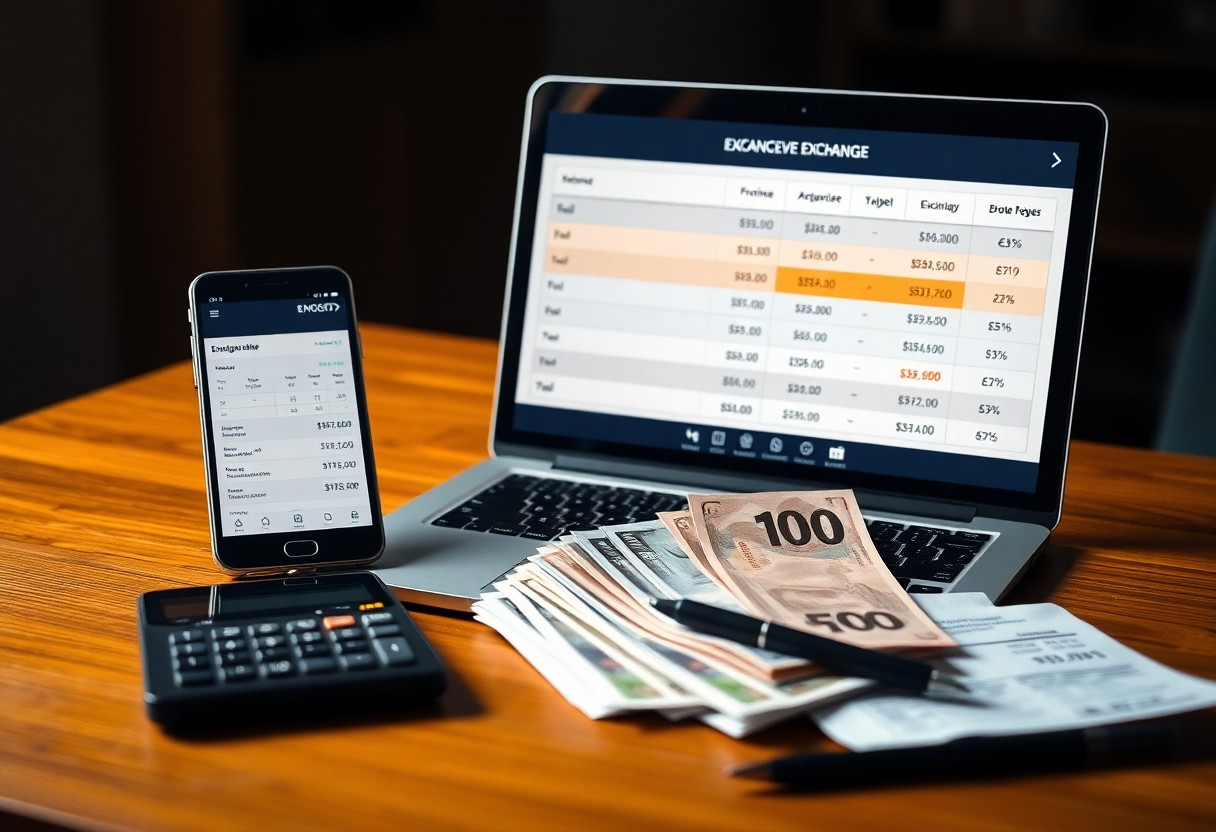
Just use comparison sites, check the mid-market rate, factor in fees and delivery costs, and choose the provider offering the lowest total price so you get the best deal.
Knowing the Factors That Influence Rates
Market moves, central bank decisions, trade flows and local fees shape the exchange you’ll get.
- Interbank (mid-market) price
- Provider margins and commissions
- Economic releases and headlines
- Timing and liquidity
Compare providers’ rates, fees and transfer speed so you can choose the best overall deal.
Understanding the mid-market rate
Mid-market is the price banks trade at with each other; you should use it as the benchmark when checking offers so you spot added margins.
Why currency values fluctuate daily
News about growth, jobs or trade shifts demand for a currency and can move rates within hours.
Interest rate expectations and central bank signals push traders to buy or sell, changing prices you see.
Any sudden events, from political updates to commodity shocks, can widen spreads and alter the rate you receive.
How to Find the Real Exchange Rate
Check live mid-market rates on reputable financial sites to see the true exchange value, then compare those rates to the offers you get from banks, kiosks, or apps.
When you spot a gap between mid-market and offered rates, factor in flat fees, minimum charges, or tiered commissions so you can calculate the effective rate per unit.
Using online conversion tools
Online converters give real-time mid-market rates and let you plug in amounts to see ideal outcomes, so use them as a baseline before checking provider quotes.
Identifying hidden markups and service fees
Ask whether quoted rates include a markup over the interbank rate and whether any flat or percentage fees are added at checkout, since those extras change the real price you pay.
Also request a written breakdown or sample calculation and convert the difference to a percentage so you can compare the total cost across providers on the same basis.
Tips for Comparing Different Providers
Check rates, fees, transfer speed, payment methods and protections so you can judge the true cost and convenience of each option.
Comparison checklist
| What to compare | Why it matters |
|---|---|
| Exchange rate | Determines your received amount |
| Fees | Can wipe out rate savings |
| Transfer speed | Matters for urgent payments |
| Limits & protections | Protects large or disputed transfers |
- Compare total cost, not just the headline rate
- Use calculators to see net amounts
- Check user reviews and regulatory status
Evaluating banks versus online transfer services
Banks often charge higher markups and fixed fees, so you should compare the effective rate and total cost; online services typically offer lower margins and faster transfers, but check limits and buyer protections before sending funds.
What to look for in local exchange kiosks
Local kiosks may display competitive cash rates, yet you should ask for the final amount in your currency, verify any commission, and only use booths that provide clear receipts and staff identification.
After you confirm the posted rate, request a written breakdown and watch the calculation; you should avoid kiosks that refuse to show a final total or tack on unexplained service charges.
How to Use Technology to Your Advantage
Apps and websites let you compare live mid-market rates, bank fees, and total costs so you can spot the best deal before you buy.
You can cross-check a couple of sources, including fintech platforms and bank pages, to confirm a consistent rate and avoid surprises at checkout.
Setting up automatic rate alerts
Set alerts for specific currency pairs and target rates so you’re notified the moment the market hits your number; this saves you from constantly watching charts.
Alerts can be customized for push, email, or SMS and often include historical charts to help you decide whether to act or wait.
Downloading the best currency apps for your phone
Install apps from reputable developers that show live mid-market rates, transparent fees, and user reviews so you can judge reliability quickly.
Compare features like rate alerts, fee calculators, and supported currencies, and only keep the few apps that give accurate quotes without hidden charges.
Look for offline modes, biometric security, and the ability to lock a rate for a short time if you plan to complete a transaction later.

Essential Factors When Timing Your Buy
Timing small moves can save you a noticeable amount when rates shift; you should watch short-term dips and avoid panic buys. You can set alerts for target rates and keep a simple checklist so you act when conditions match your plan.
Check providers for their published rates, hidden fees, and cut-off times before committing funds.
- Compare offered rate to mid-market rate
- Factor in flat fees and percentage commissions
- Note transfer speed and provider cut-off times
Watching for favorable market trends
Watch daily charts and an economic calendar to spot patterns that favor your currency pair; you can use simple moving averages or alerts to flag sustained moves. You should avoid guessing on single ticks and instead look for confirmations like volume or repeated direction over several sessions.
Avoiding the “weekend spread” surcharges
Avoiding trades over weekends cuts the risk of higher markups from providers that widen spreads when markets are closed; you can plan exchanges on weekdays when liquidity tightens spreads. You should compare Friday and Monday quotes to measure typical weekend surcharges for your provider.
Thou will do well to check provider terms for weekend pricing, test small transfers on different days, and prioritize weekday execution to keep costs lower.
How to Calculate Your Total Savings
You should convert both the advertised rate and the mid-market rate into the same base amount to see the exact savings after all fees and charges.
Calculate the net amount by subtracting commissions, fixed fees, and any card or withdrawal charges, then compare totals to decide which provider gives you the most value.
Doing the math on the final cost
Start with the amount you need converted and apply each provider’s rate, then add their fees so the comparison reflects what you actually receive.
Use a simple spreadsheet or calculator to run scenarios for different rates and amounts so you can spot when a small fee erodes a slightly better rate.
Verifying the transaction details before you pay
Check the quoted rate’s validity period and whether it’s guaranteed at payment or only indicative, since that changes the final amount you will get.
Confirm the total debit shown includes all fees, delivery or collection charges, and taxes so the final charge matches your comparison figures.
Ask for a written quote or receipt that lists the rate, fees, and exchange reference so you can resolve discrepancies if the amount received differs from the agreed total.
Final Words
Summing up, you should check the mid-market rate, compare offered exchange rates and all fees across banks, bureaux and online platforms before you buy. You can use comparison sites and apps to spot better offers and lock a rate when it suits your plans, since small differences add up.