Choosing a money changer in Chennai is mostly about trust and transparency. The right provider is authorised by the Reserve Bank of India (RBI), tells you the full cost before you pay, follows proper KYC checks and gives you a receipt for every transaction. Rates matter too, but a slightly better rate from an unauthorised dealer is never worth the risk.
This guide explains what to check, how the main options in Chennai compare, and the warning signs that should make you walk away.
Why the Choice of Money Changer Matters
When you buy foreign currency for a trip, the money changer’s margin, service charges and GST all affect how many rupees you actually pay. Beyond cost, there are compliance risks: foreign exchange in India is regulated under the Foreign Exchange Management Act (FEMA), and only authorised persons can legally buy and sell it. Dealing with an unauthorised party can leave you with counterfeit notes, no receipt and no recourse.
A good money changer quotes the final rupee amount, asks for your documents and hands you a receipt. If any of those three is missing, think twice.
7 Things to Check Before You Exchange Currency in Chennai
1. RBI authorisation
Only banks, authorised dealers and full-fledged money changers (FFMCs) licensed by the RBI can sell foreign exchange for travel. The RBI publishes a list of full-fledged money changers by regional office, and Chennai is one of them. Check the business name and address before you visit.
2. A clear selling rate and the final amount
When you buy currency you pay the money changer’s selling rate; when you sell it back you get the buying rate. Ask for both, and ask for the final rupee figure including any service charge and GST. Our explainer on buying and selling rates covers why the two differ.
3. Proper KYC and documentation
A compliant provider will ask for your passport, visa (where applicable), air ticket and PAN card. Being asked for documents is a good sign, not an inconvenience.
4. Receipts
Insist on a printed receipt that shows the currency, amount, rate and charges. Keep it; it helps if you sell leftover currency later.
5. Currency availability
Common currencies such as US dollars, euros, pounds and UAE dirhams are usually in stock. Less common ones may need a day or two, so ask in advance.
6. Payment rules
RBI rules allow cash payment for forex only when the purchase is below ₹50,000. Larger amounts must be paid by cheque, demand draft, card or another non-cash method (RBI FAQ). A dealer who offers to take large cash payments is not following the rules.
7. Buyback and after-trip support
Check whether the provider buys back unused currency and reloads or refunds travel cards. A provider you can return to after the trip is more useful than a one-off counter.
Banks, Money Changers, Airport Counters and Online Platforms Compared
| Option | Strengths | Things to watch |
|---|---|---|
| Bank branch | Regulated, familiar, good for remittances | Limited currency stock at some branches; may need an account |
| Authorised money changer (FFMC) | Wide currency range, quick service, buyback | Rates vary between dealers, so compare the final amount |
| Airport counter | Convenient for last-minute needs | Usually the costliest option |
| Online forex platform | Easy rate comparison, home delivery in some cases | Delivery timelines and pickup rules vary |
For most trips, arranging currency a few days early with an authorised money changer in the city gives you time to compare and to order any unusual currency. Our guide to airport versus city currency exchange goes into more detail.
Red Flags to Avoid
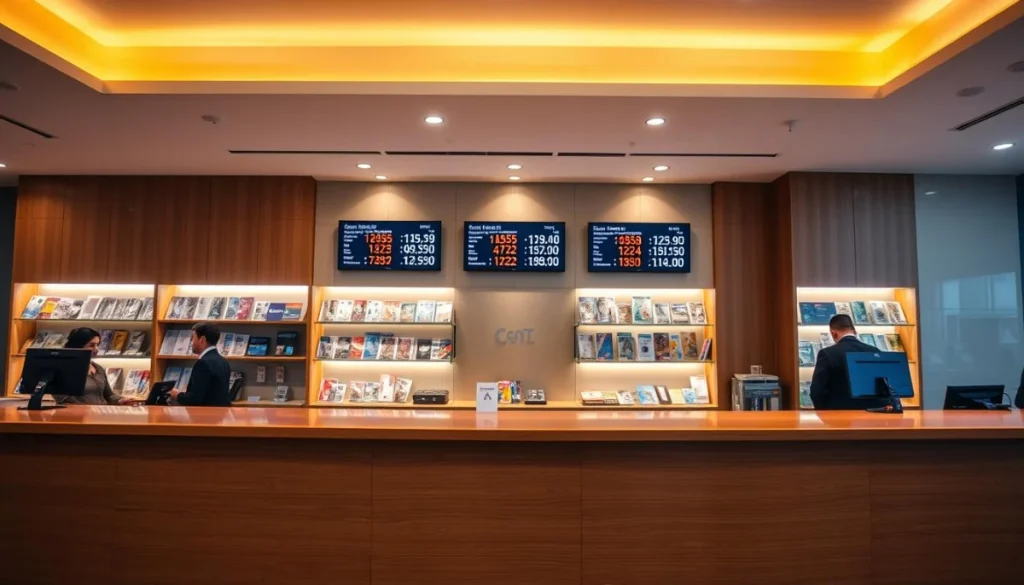
- Rates that look far better than everyone else’s, with no explanation
- No request for passport, PAN or travel documents
- No printed receipt, or a handwritten slip without the business name
- Pressure to pay large amounts in cash
- Street dealers or individuals offering to exchange currency “privately”
- Notes that are torn, marked or of a very old series
The RBI has repeatedly warned the public to deal only with authorised entities. If something feels wrong, leave and use a bank or a listed money changer instead.
A Simple Checklist for Your Visit
- Decide the currency and amount, keeping foreign cash within the RBI limit of USD 3,000 (or equivalent) per visit for most countries.
- Call ahead to confirm availability and the current rate.
- Carry your passport, visa, ticket and PAN card.
- Confirm the final rupee amount before paying.
- Count the notes at the counter and check their condition.
- Keep your receipt safe.
If you also need a travel card for card payments abroad, compare it with cash before you decide. Our guide to forex cards versus cash explains when each works best.
Where GEM Money Changers Fits In
GEM Money Changers serves Chennai from its branch at 110, Sir Thyagaraya Road, T. Nagar, close to Pondy Bazaar. The team handles foreign currency purchase and buyback, travel cards and help with overseas payments. See our currency exchange in Chennai page for services and directions, or the T. Nagar branch page if you are nearby.
Need foreign currency in Chennai?
Call our T. Nagar branch to check availability and today’s rate before you visit.
Frequently Asked Questions
How do I know if a money changer in Chennai is authorised?
Check the RBI’s published list of full-fledged money changers for the Chennai regional office, or deal with a bank. Authorised providers follow KYC rules and issue receipts.
Is it cheaper to exchange currency at a bank or a money changer?
It depends on the day and the currency. Compare the final rupee amount, including charges and GST, from two or three authorised providers rather than the headline rate alone.
Can I pay cash for foreign currency in Chennai?
Yes, if the purchase is below ₹50,000. For ₹50,000 and above, RBI rules require payment by cheque, demand draft, card or another non-cash method.
What documents do I need to buy foreign currency?
Usually your passport, a valid visa where required, your air ticket and your PAN card. The provider will confirm anything else needed for your trip.
Should I exchange money at Chennai airport?
Airport counters are handy for small top-ups, but arranging currency in the city a few days before you fly usually costs less and gives you time to compare.
Sources
- Reserve Bank of India: FAQ on miscellaneous forex facilities
- Reserve Bank of India: List of full-fledged money changers
- Reserve Bank of India: Master Direction on Other Remittance Facilities
This article is general information, not financial or legal advice. Rules can change; confirm requirements with an authorised provider before you travel. Last reviewed: November 2026.